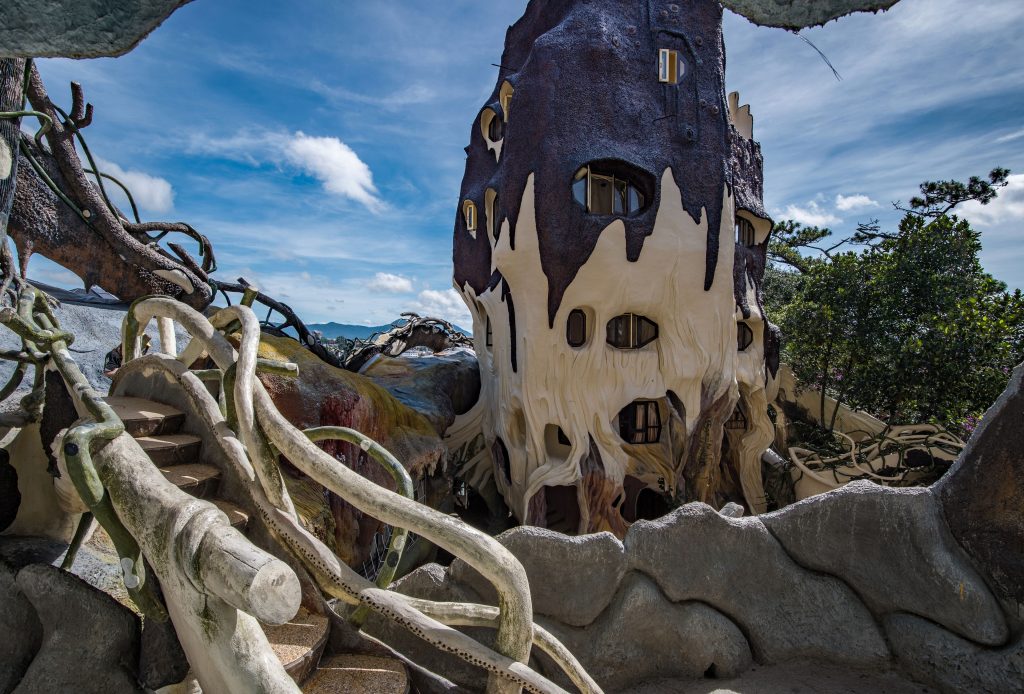
Some buildings follow rules. This one ignored all of them.
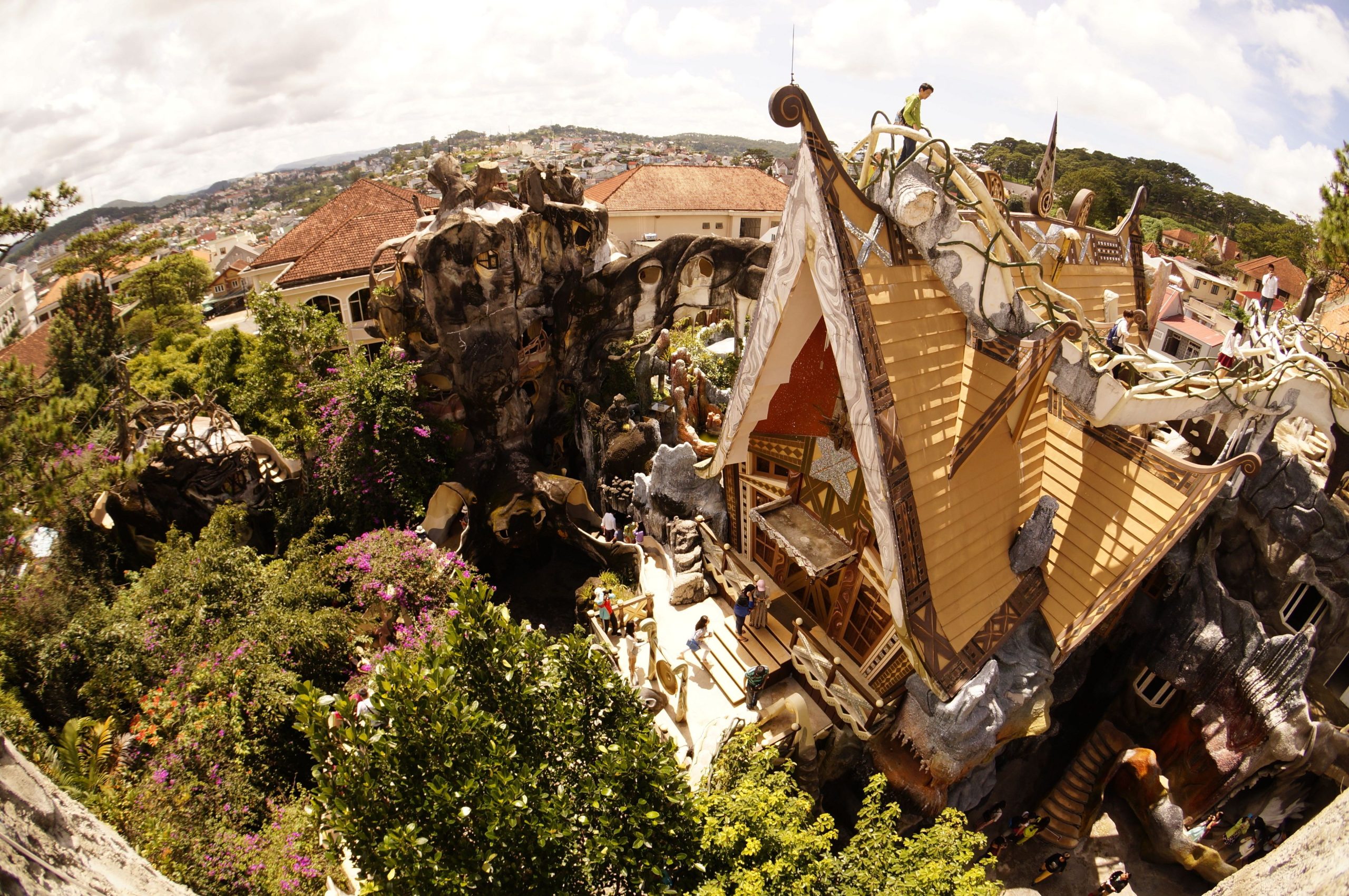
Da Lat’s Crazy House — formally known as Hằng Nga Guesthouse — is a five-story structure that looks less like a hotel and more like a forest that decided to become a building. No straight lines. No right angles. No standard blueprints. Just organic forms, cave-like corridors, and rooms that spiral outward from a central structure resembling a giant banyan tree.
You can sleep here. That’s the part that stays with you.
The Architect Behind It
Đặng Việt Nga designed this building as a personal project. She holds a PhD in architecture from Moscow State University, and her work draws openly from Antoni Gaudí — the Catalan architect known for treating structure as living form. Visitors have also compared the house to Dalí, to Disney, to dreams.
She didn’t use conventional blueprints. Instead, she painted her ideas, then hired local craftsmen — non-professionals — to build from those paintings. The result is a building that feels made by hand, not by plan.
The local government opposed it for years. She built it anyway, funded by friends and family, until Hanoi eventually endorsed the work. The building has been evolving since it opened in 1990.
What the Building Looks Like
From the outside, the structure reads as a tree — a five-story banyan with unevenly shaped windows and branch-like protrusions that grow above the roof. Giant mushroom forms emerge from different levels. Spider web railings. Sculpted animals emerging from walls. Every surface has been shaped, textured, or carved.
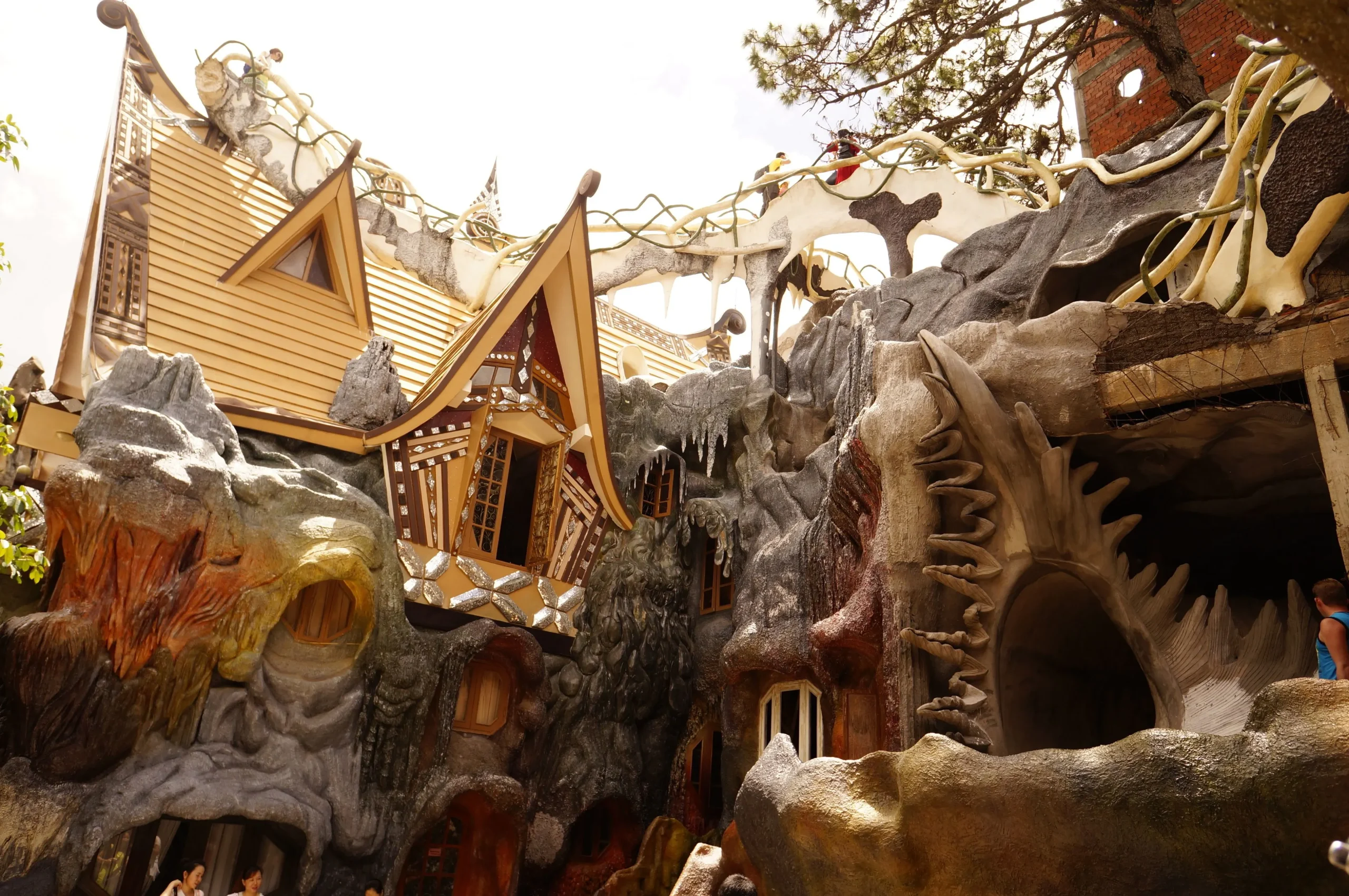
Inside, corridors feel more like tunnels. Staircases spiral through the building’s limbs. Hallways narrow and widen without pattern. The architecture doesn’t walk you through a space — it draws you into one.
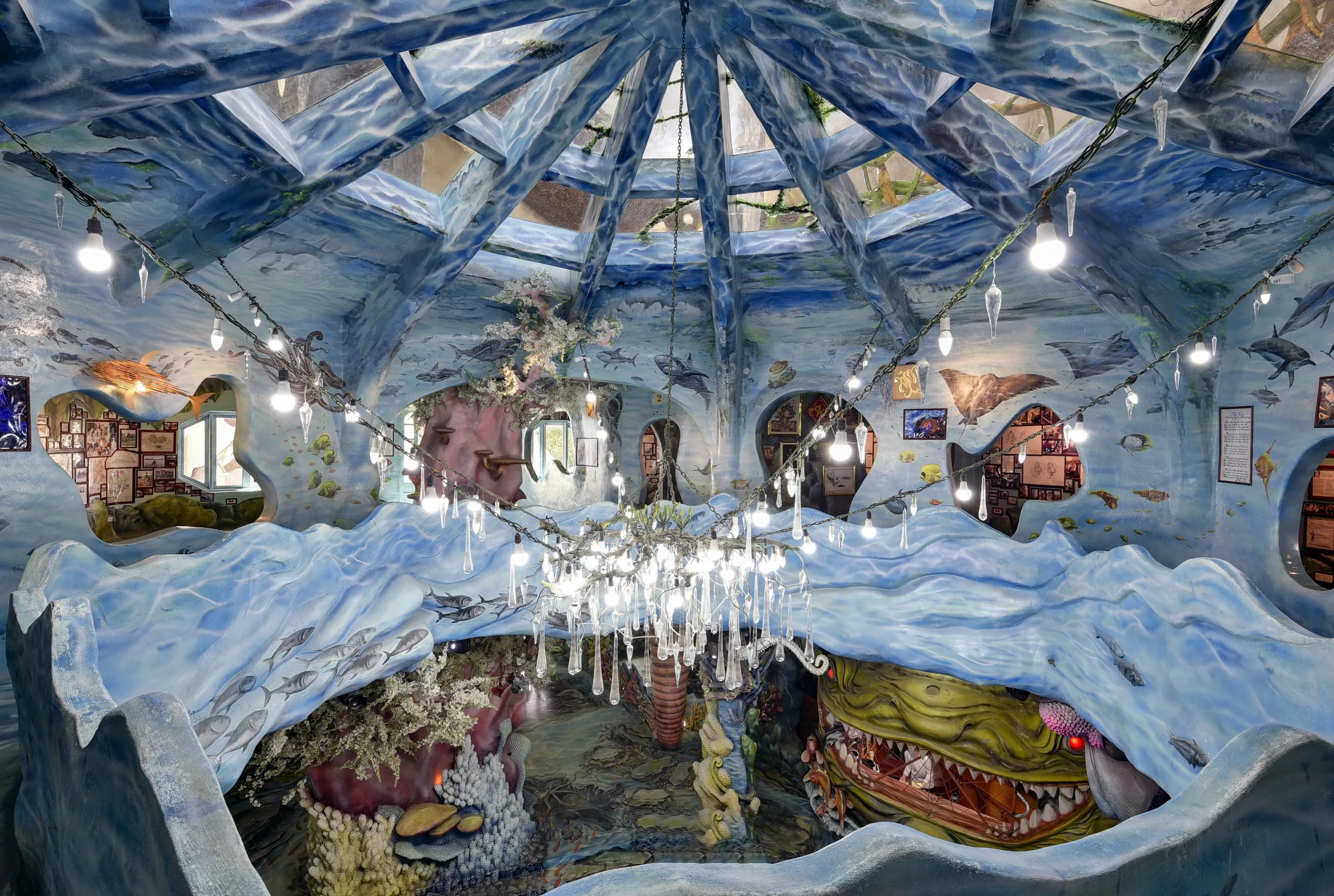
The Rooms
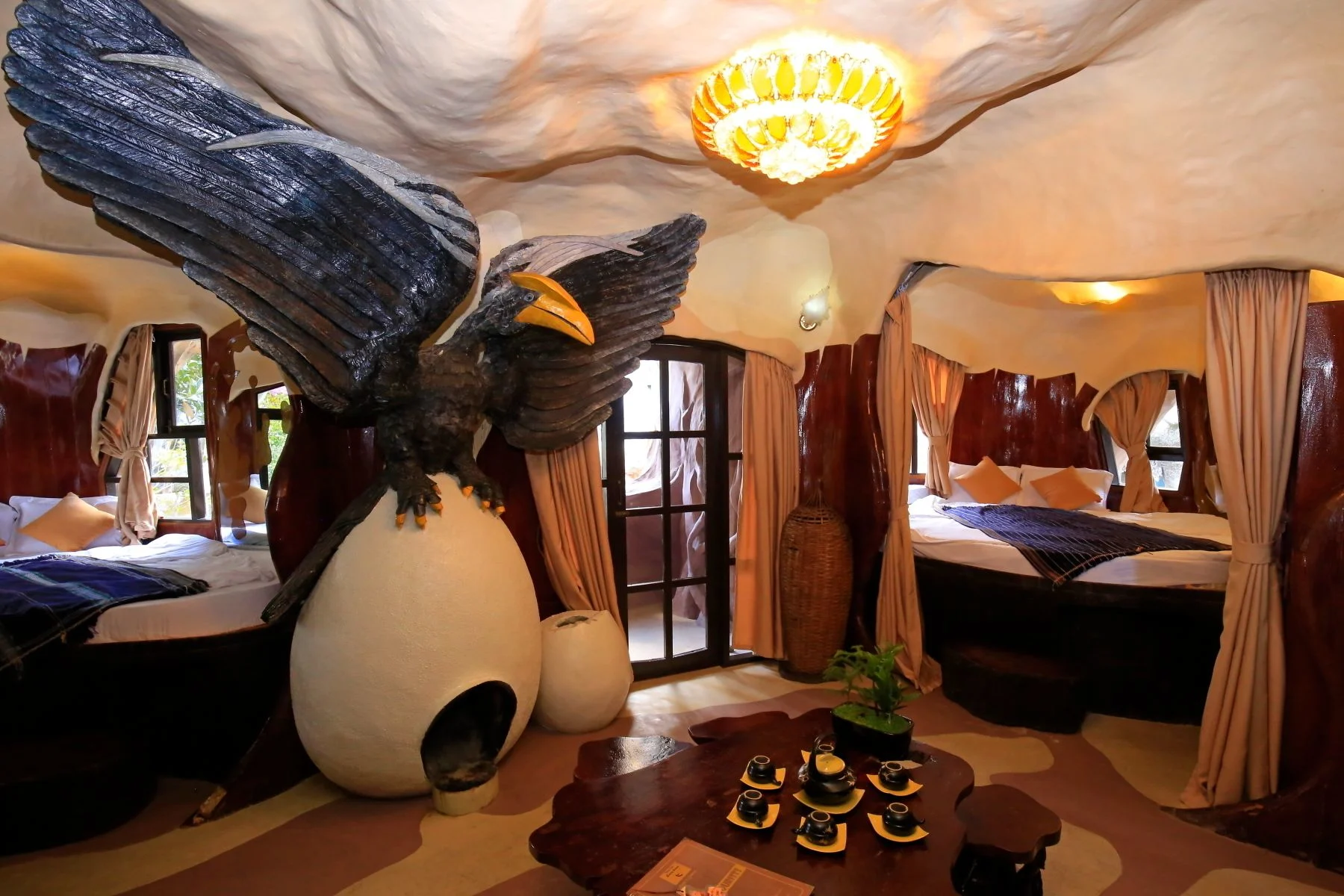
There are ten guest rooms, each themed around an animal. The eagle room has a fireplace shaped like a giant eagle’s egg. The tiger room has a large tiger with glowing red eyes built into the wall. The kangaroo room has a sculpted kangaroo with a fireplace in its belly.
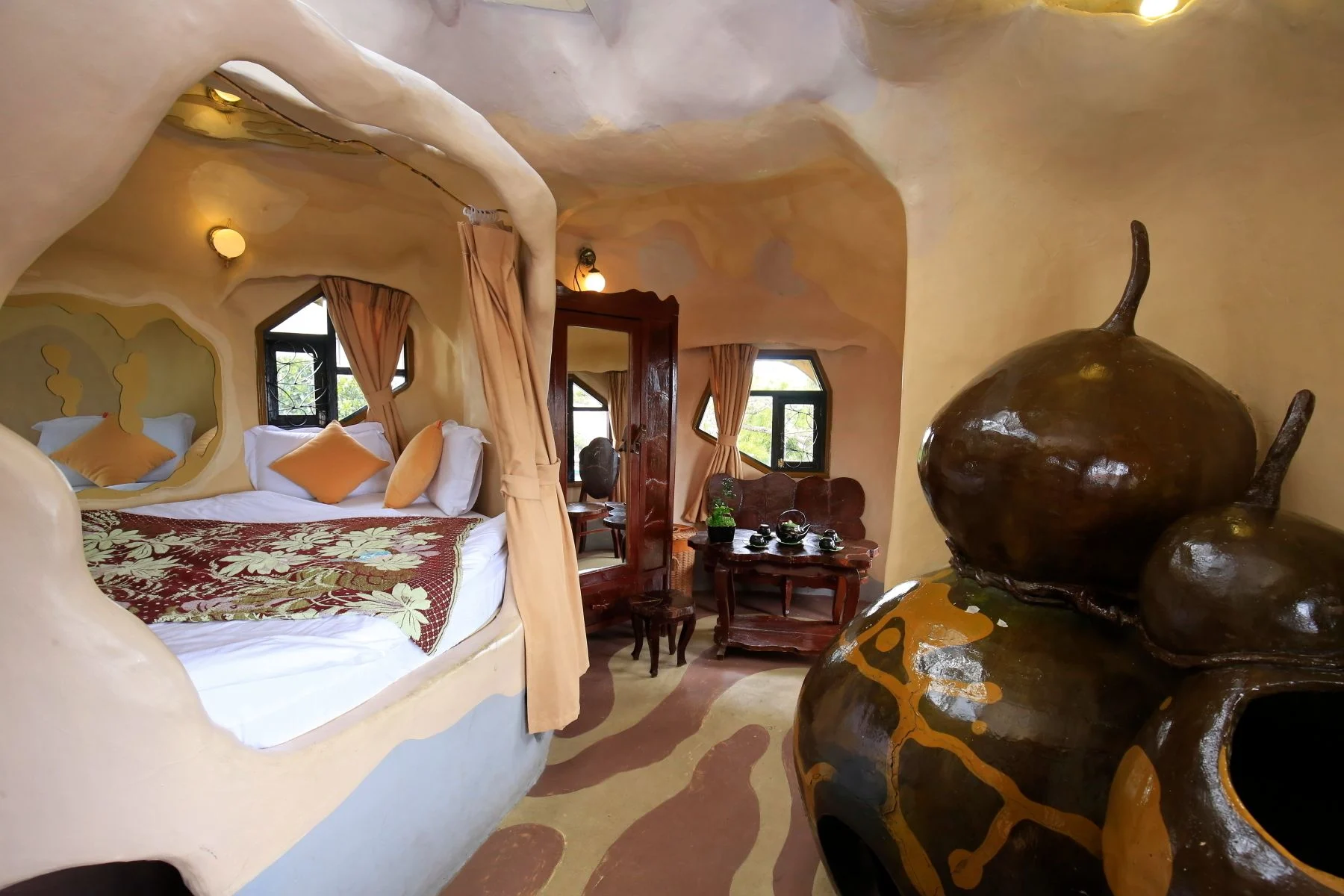
Furniture is handcrafted — sometimes built directly into the walls and floors to match the nonlinear shape of each room. The rooms don’t follow hotel logic. They follow the logic of the building.
Da Lat as Context
The building sits in Da Lat — Vietnam’s highland city at 1,500 meters, cooler than the rest of the country, often wrapped in mist. The city is known for its French colonial architecture, pine forests, and a climate that earns it the nickname “City of Eternal Spring.”
That setting matters. Nga has said the natural environment surrounding Da Lat was a direct inspiration for the building’s organic forms. The shape of the structure doesn’t fight the landscape. It extends from it.
Staying vs. Visiting
The Crazy House functions as both a tourist attraction and a working guesthouse. During the day, visitors walk through it independently. By evening, it becomes quieter — and the building is yours to explore without the crowds.
If you’re visiting Da Lat, staying here changes how you experience it. The building is the reason to come — and sleeping inside it is different from seeing it for an hour.
How to Book
The Crazy House is listed on Expedia with several room types, each individually decorated. Rooms start from around $29/night.
If you’re planning a wider trip, Da Lat has a strong range of hotels for different budgets — from boutique stays to design-forward properties. Worth building a few nights around this one.
Check availability and Book here!